From Brandon Martini
Why We Pour Wine in 3-Ounce Tastes
October 8, 2026
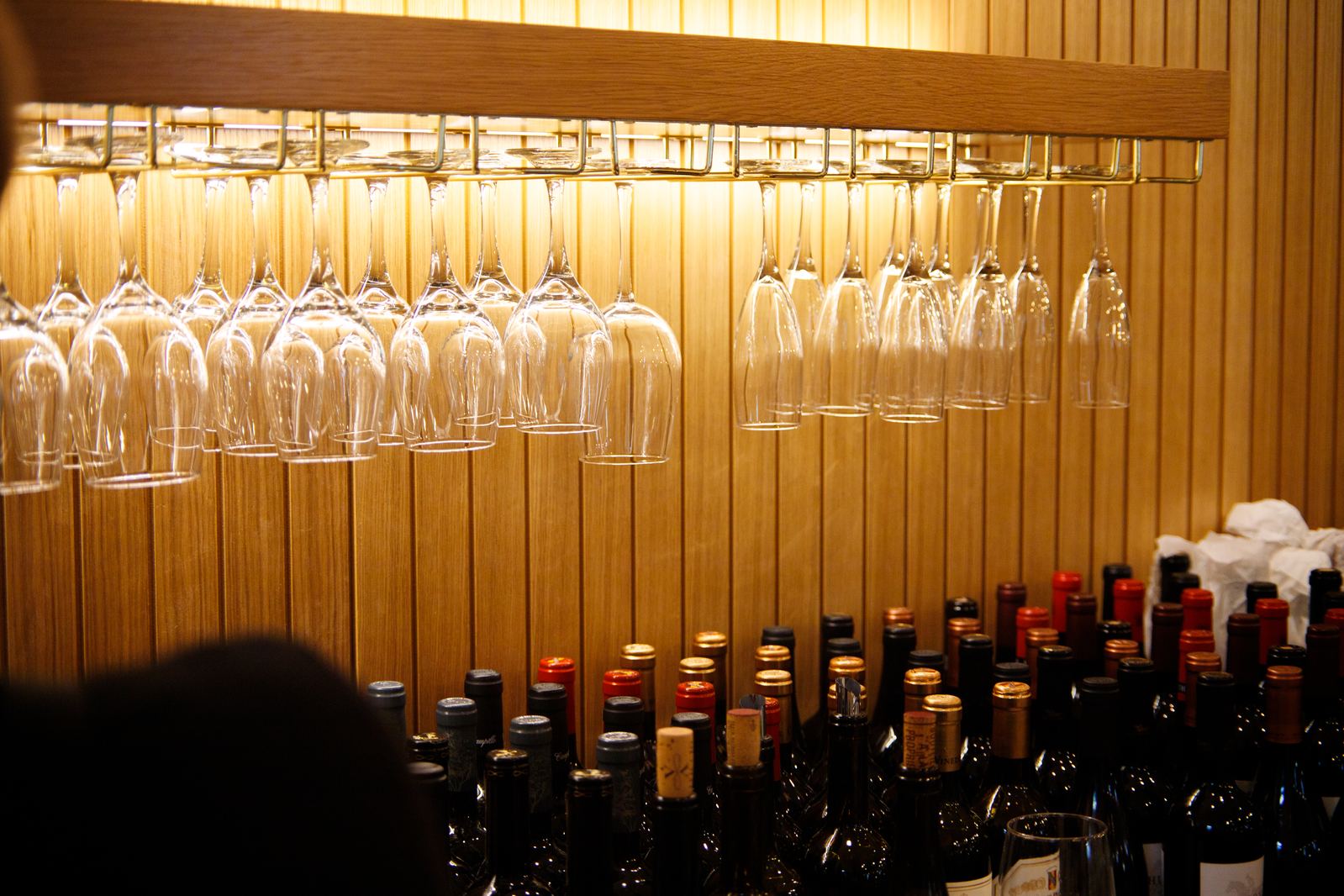
Look at our wine list and most of the wines poured by the glass carry two prices. The smaller one is for three ounces. A 3-ounce pour is half of our six-ounce glass, roughly an eighth of a bottle, and enough for a few real sips. It's a tasting pour: you get to know a wine without signing up for a full glass of it, and you move on while your palate is still paying attention.
We didn't add it as a gimmick. It's how I'd want to drink at a wine bar if I didn't own one.
What can you learn from three ounces?
Most of what matters. The first few sips tell you whether a wine is light or heavy, bright or soft, and whether you want more of it. In my experience the rest of a full glass is mostly confirmation.
There's a second reason. A palate gets used to whatever's in front of it. By the bottom of a big glass of red, the last sip doesn't taste like the first did, and the wine starts to blur into "red." Switching every three ounces keeps each wine sharp, because there's always something new to compare it to.
Is it cheaper?
Not per ounce, and I'd rather say that plainly. The Patrick Jasmin Syrah from the northern Rhône is $16 for three ounces and $23 for six, so double the wine costs $7 more. The Contino Reserva is $26 for three and $36 for six. If you already know you love a wine, the six-ounce glass is the better buy, and I'll tell you so.
What the small pour buys you is the right to be wrong for less money. If a wine doesn't land, you're out three ounces, not six, and the next one is already coming. On a list like ours, with Carmenère from Chile and Albariño from Rías Baixas next to the Napa Cabernets, that matters more than the per-ounce math.
Two pours side by side
Order two at once and taste them against each other. One wine on its own is just a wine. Two is a comparison, and comparison is how most people figure out what they actually like.
The pair I'd start with is Tempranillo from Rioja, twice. The El Niño de Campillo 2023 is $13 for three ounces. The Contino Reserva, which we pour by Coravin, is $26. Same grape, same region, twice the price. Side by side, you get to decide for yourself what the extra money is buying, and whether it's worth it to you. Preferring the younger, cheaper one is a perfectly good outcome. I'd rather you learn that for $13 than find out over a whole bottle.
Why dessert wine stops at three ounces
The Dessert & Fortified section of our list doesn't offer a six-ounce glass at all. Those wines pour in three ounces only, and I think it's the right size for them. They're rich and concentrated. Three ounces of tawny port at the end of dinner is a complete thought; six would be a project.
The small pour also puts a few rare bottles within reach. The Château d'Yquem 2018 is $99 for three ounces, and the Sandeman 50-Year Tawny Port is $125. Neither is sold by the bottle on our list; three ounces is the only way we serve them. For something gentler on the wallet, the Sandeman 20-Year Tawny is $22.
When there's no small price
A handful of wines skip the three-ounce column and start at six. The Canard-Duchêne Champagne ($39), the Emeritus Hallberg Pinot ($28), and the Tara Viognier ($35) are poured that way. Plenty more have no glass price at all. For those, the house rule still applies: any bottle on the list can be poured as a single glass at half the bottle price. I walked through how to use that in how to read our wine list.
How I'd spend an evening in small pours
Start with three ounces of the Abadía de San Campio Albariño ($12) while you look at the food menu. Put the two Riojas side by side when the mains arrive. Finish with three ounces of the Sandeman 20-Year Tawny with dessert.
That's four wines and twelve ounces, the same amount as two six-ounce glasses. It's also four different conversations instead of two, and by the end of the night you'll know a little more about what you like than when you sat down. I'm biased, but I think that's the point of a wine bar.
Not every wine on the list comes in a small pour, and the menu shows which ones do today. Reservations are open whenever you want to start small.
How big is a 3-ounce wine pour?
Three ounces is half of Solera's six-ounce glass and roughly an eighth of a standard 750ml bottle, enough for a few real sips. Most wines Solera pours by the glass are offered in both 3 oz and 6 oz sizes, and dessert and fortified wines pour in 3 oz only.
Is a 3-ounce pour cheaper than a full glass?
It costs less per pour but more per ounce. The Patrick Jasmin Syrah, for example, is $16 for three ounces and $23 for six. The smaller pour is for trying a wine, or comparing two side by side, without committing to a full glass.
Join the Solera list
Get on our list for updates on events and our restaurant